Showing posts with label Artists. Show all posts

Monday, September 27, 2010

ur house is garbage

some of yo say photos are not loading. get a mac.
or go to this link here
sorry for the hassle.

Won Park - is the master of Origami.
He is also called the"money folder", a practitioner of origami whose canvas is the United States One Dollar Bill.
Bending, twisting, and folding, he creates life-like shapes in stunning detail.
HE ALSO LIVES IN A GARBAGE TRUCK..........SEE BELOW.


One Dollar Fish


One Dollar
Butterfly

One Dollar Camera

Two
Dollars Battle Tank

Two Dollars Chinese Dragon

One Dollar Crab

One Dollar Dolphin

Two Dollars Jacket

Two Dollars Spider

One Dollar Scorpion

One Dollar Bat

One Dollar Toilet Bowl

One Dollar Penguin


One Dollar Shark

One Dollar Jet

One Dollar Hammer Head Shark


And here's is home! He lives in this garbage truck!


thanks lisa for sending gwd this


Friday, July 30, 2010

Plein Air Painting: Taking Your Paints Outside

Last week I was gifted with a ‘plein air’ watercolor workshop given by Lynn Onley.  Plein air painting is a familiar concept today, but in the late 1800s when the Impressionists ventured out of their studios into nature to investigate and capture the effects of sunlight and different times of days on a subject, it was quite revolutionary.  We met at Porteau Cove, which is situated overlooking Howe Sound, 38 km north of Vancouver on the Sea-to-Sky Highway on the way to Whistler. Interestingly, I learnt that an old ship has been sunk in the bay, so as well as attracting outdoor enthusiasts, scuba divers and marine biologists come here to explore  the depths of the ocean.  A pebble beach slopes gently into Howe Sound in Porteau Cove. On summer days when the tide is low and the sun high, the warm rocks heat the incoming waters, making swimming here a pleasure. Lynn Onley who gave the workshop, is the daughter of Toni Onley, one of Canada’s most celebrated artists. His landscapes have always provided a special significance for Canadians in reviving an appreciation for our surroundings. Lynn Onley following in her father’s footsteps is an accomplished artist herself.  I felt very privileged, and excited to have the opportunity to learn the art of watercolor from Lynn Onley as passed down to her from her celebrated father Toni Onley.
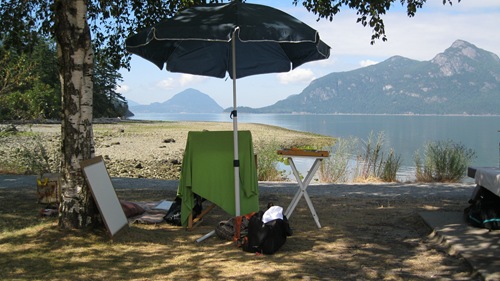
 Lynn Onley Porteau Cove 2010  
The view of the scene I painted with instruction from Lynn Onley
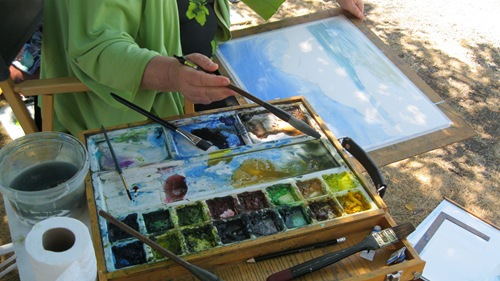
Lynn Onley Porteau Cove 2010
Lynn Onley painting Plein Air in Porteau Cove using her father, Toni Onley’s paint box

Lynn Onley painting Plein Air in Porteau Cove using her father, Toni Onley’s paint box and his wood and canvas folding chair.  The first step is to lay in the color washes for the sky, and while still wet take tissue and blot to make the clouds.  The next step is to paint in the mountains, using the ‘soup’ as Lynn calls it, which is the remaining mixture from the sky as the base to add the next colors to.  Lynn showed us how to mix Alizarin Crimson with Sepia, to tone it down, to paint in the slab-like chunks of red granite showing in the mountains.
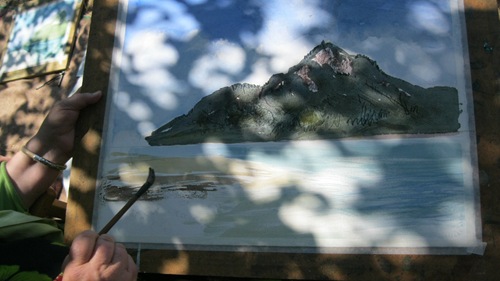
 Lynn Onley Porteau Cove 2010 
Lynn Onley demonstrates watercolors techniques

Then Lynn added in the ocean, and next the shore, and then trees.  At this point you can continue to add more detail, or take the painting home to finish.  I had to leave at this point with my water color still needing more work.  I took it with me on my trip to Desolation sound and added in more detail, working from memory and being further inspired by the colors and light in the more northern atmosphere of Desolation Sound – Desolation Sound is at the 52nd Parallel, while Porteau Cove is at the 49th Parallel.  Thanks Lynn for the inspiring day!!
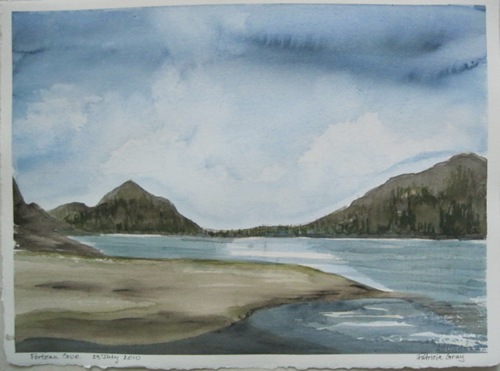
Porteau Cove 2010 Patricia Gray 
My finished watercolor of Porteau Cove after a morning of instruction from Lynn Onley.
11” x 15” on 140 lb watercolor paper , Windsor Newton paints

A pebble beach slopes gently into Howe Sound. It was low tide so the green moss on the rocks usually below the water line was showing.  We started painting at 10:00 AM, and the sky, cloud formations, and shadows on the water were constantly changing as the sun and tide line changed.
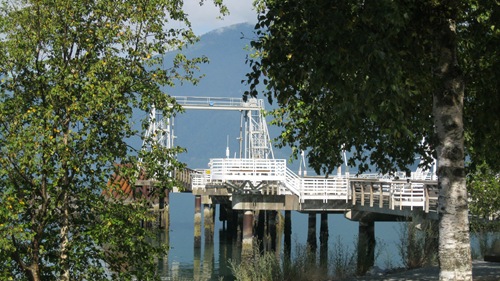
Porteau Cove 2010
The dock at Porteau Cove.

Porteau Cove 2010
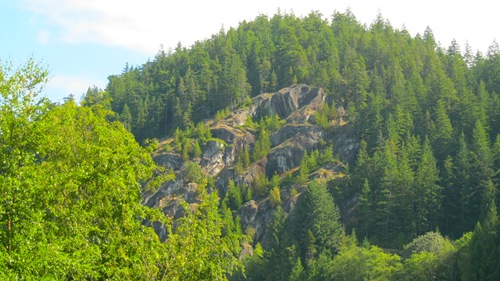
The granite mountains above Porteau Cove on the highway to Whistler.
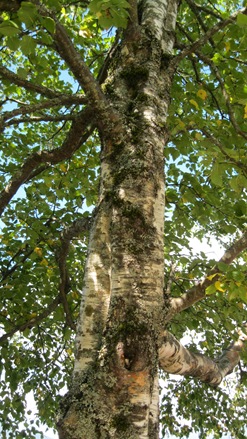
 

 Porteau Cove 2010 Porteau Cove 2010

These pictures are of the beautiful tree I sat under while painting at Porteau Cove.  I took these pictures as inspiration – possibly for my next water color.

Van Gogh, in a letter to his brother, claims to
“devour nature ceaselessly,”
and finds himself  
“in surroundings which entirely engross me,
which so order, fix, regulate, renew and enlarge my thoughts
that I am quite wrapped up in them.” 
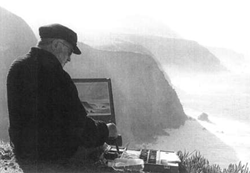
Toni Onley Toni Onley

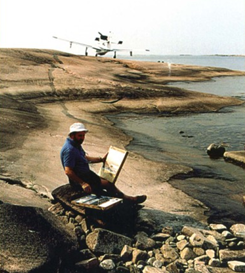
Toni Onley 1928 – 2004, one of Canada’s most celebrated artists, painting Plein Air.
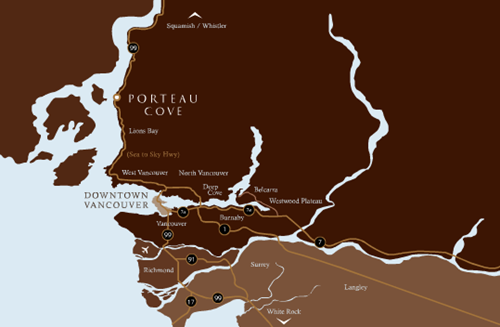
Porteau Cove 2010
Map of Porteau Cove

Patricia Gray Inc is an award winning Interior Design firm  in Vancouver, Canada who blogs about Lifestyle and WHAT'S HOT  in the world of Interior Design.
2010 © Patricia Gray | Interior Design Blog™

Wednesday, February 17, 2010

Objects d' Art Ivan Meade

image
IVAN MEADE OBJECTS D' ART  

I was recently gifted with this extraordinary 925 Sterling Silver Object d' Art by the talented & inspired designer Ivan Meade. It is now a treasured piece in my home.   Below is the story of Ivan’s inspiration for creating this piece.  I love it when artists share how they came to design a piece….and how their works of art are birthed into the world of form.

 image


Patricia Gray Inc is an award winning Interior Designer firm  in Vancouver, Canada who blogs about WHAT'S HOT  in the world of Interior Design.
2010 © Patricia Gray Interior Design Blog™

Tuesday, November 17, 2009

how an artist lives

she's an artist for the company papaya. her name is anahata katkin.
her home looks like an artist put it together. enjoy. her blog goes on the list today.


Home Again...by Anahata Katkin

Housepost

Doing art pieces has been my first love. But I'd say I've had a love affair with interiors since I was a child. To me the idea of home and the interest in personal spaces goes hand in hand with an artists perspective.

Rooms

My home is always a mix of West Coast artist originals, folk art and traditional textiles from all over the world and a few of my own pieces. I can't resist modern goodies, foreign relics, and good old bohemian flair. I've tried to limit my palette at times but have since given in to my cornucopia of interests and visual loves.Kitchen

This is a new home for me. We just moved in last week and I'm enjoying having such a deep, historical house to play with. It feels good to have a sturdy home after my year in Belize. I've transplanted many of my paintings from the island and given them a place within the moody, Northwest bungalow.

Livingroom

You can be sure I'll be tinkering away on new PAPAYA! designs from my office wearing pajamas and sliding around in my socks! How does your inner perspective and love of Earthly goods translate in your home?

Thursday, June 18, 2009

Mixed Media Painting Techniques, Frottage and Grattage

                                                                 Frottage 1 - 24" x 36" Mixed Media Painting: Pastel, Acrylic, Gesso on Glassine

For this summer's program of continuing education (last summer I studied Architecture in Italy), I have embarked on a course in 'Mixed Media Painting Techniques' at Emily Carr University of Art. The course teaches the process of image-making on built surfaces and works with a range of materials such as gesso, plaster, paint, ink, charcoal, and various papers. I am learning to explore 'expression and emotion' through layering, drawing, brushwork, Frottage and Grattage following in the footsteps of the greats in mixed media painting like: Max Ernst, Mark Rothko, and Paul Klee. I particularly like my teacher, Diana Kubicek's style of teaching. She teaches us to explore the various techniques fearlessly and says repeatedly there are "no mistakes"in painting. As a matter of fact "mistakes can be the building block of a great masterpiece". I like that! I have always been interested in drawing and sketching since my days in Design School, but find that I never have the time to take a brush to paper and do larger abstract paintings and works of art. So this course is a perfect opportunity to allow myself the freedom to explore different mixed media painting techniques. The last class we spent exploring the technique of Frottage (from French frotter, "to rub") a surrealist and "automatic" method of creative production. Frottage was developed by Max Ernst.

Frottage 2  - 8
Frottage 2 - 18" x 24" Mixed Media Painting: Ink, Acrylic & Pastel on Paper

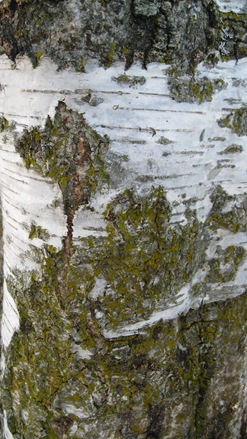
In frottage painting the artist takes a pencil or other drawing tool and makes a "rubbing" over a textured surface. The frottage drawing can be left as is or used as the basis for further refinement (which we are supposed to do for homework with the pieces we created in this class). While this technique is superficially similar to brass rubbing and other forms of rubbing intended to reproduce an existing subject, frottage painting differs in being aleatoric and occurring by chance. Frottage was developed by Max Ernst in 1925. Ernst was inspired by an ancient wooden floor where the grain of the planks had been accentuated by many years of scrubbing. The patterns of the graining suggested strange images to him. He captured these by laying sheets of paper on the floor and then rubbing over them with a soft pencil. In my Frottage Paintings 1, 2 and 4 the textured surface that I used to make the Frottage rubbing was a bamboo mat, string, and screen. In Frottage Painting 3, I did the rubbing over a Gessoed canvas that was prepared with the free form focus on the bark of a tree. As I was doing Frottage Painting 3, rubbing on the Gessoed canvas, it slowly evolved to resemble a Japanese mountain landscape with a waterfall collecting into a pool at the base of the mountain. Our teacher guided us in exploring this technique in creating our Frottage paintings which is based on Surrealist automatism*. *Automatism is a surrealist technique in painting, practiced without conscious aesthetic or moral self-censorship. Automatism has taken on many forms: the automatic painting and drawing initially (and still to this day) practiced by surrealists can be compared to similar, or perhaps parallel phenomena, such as the non-idiomatic improvisation of free jazz.
 

Frottage 3 - 18 

Frottage Painting 3 - 18" x 24" Pastel on tracing paper

Frottage 4 - 12

Frottage Painting 4 - 12" x 18" Mixed Media Painting: Acrylic & Gesso on paper

In the first class we explored the technique of mixed media painting starting with a base of Gesso

 11

Study 1 - 11" x 14" Mixed Media Painting Technique: Gesso, Acrylic and Watercolor on Card Stock

Gesso is an art supply used as surface preparation or primer for painting and sculpting. Gesso is believed to have been developed in Italy, since the word gesso is Italian for 'chalk'. Preparation varies according to intended use, but usually consists of mixing glue with plaster, chalk, or gypsum. (Gesso is the perfect base for starting a mixed media painting.)

Gesso resembles paint, but is thinner and dries hard. Gesso is applied with a brush and must dry before the surface can be painted. This technique of applying Gesso was first created for use in painting, in order to give the surface the right properties to receive paint. In Gothic and Renaissance panel painting, the technique of applying gesso over a panel of wood was used in order to give the paint something to adhere to. It created a slightly rough surface and prevented the paint from seeping into the wood. We were taught to apply the Gesso to our surface of our mixed media painting with a palette knife using broad strokes to building up the surface. Then various tools are used to create the textures. In Study 1 I used a metal clay sculpting tool with a comb like ridge to scrape across the wet Gesso. I then used the edge of my pallet knife to scrape in the diagonal ridges, then finished off with blotting areas with a sponge. I let the piece dry and then applied watercolor and acrylic in layers to the painting, while at the same time using a roller to take off the excess wet color on the surface so that the paint pigment settled into the crevices of the Gesso. I used the side of my palette knife to scrape off the raised portions of the diagonal lines to reveal the white Gesso below - a technique called Grattage*. Also the Gesso doesn't extend to the edge of the paper and gives it an interesting border. *Grattage is a surrealist technique in mixed media painting in which (usually dry) paint is scraped off the canvas. It was employed by Max Ernst and Joan Miró

Detail of  11

Detail of Mixed Media Painting Technique: Study 1 above.

10

Study 2 - 10" x 10" Mixed Media Painting Technique: Masking Tape, Gesso and Watercolor on Glass

7

Study 3 - 7" x 10" Mixed Media Painting Technique: Gesso and Watercolor on Paper

 
Emily Carr University of Art  - Patricia Gray

Have you had any experience with Mixed Media Painting, Frottage or Grattage or other Mixed Media techniques?
Please let me know by leaving a Comment.

Abstract Art Slide Show 

Another post you might be interested in: Abstract Art - Go Big or Go Home


Patricia Gray writes about 'WHAT'S HOT 'in the world of Interior Design, new and emerging trends, modern design,
architecture, and travel, as well as how your surroundings can influence the world around you.
© Patricia Gray Interior Design Blog, 2009